Top 7 Irrigation Tips for Growing Better Soil-Grown Blueberries
Blueberries are one of the most profitable perennial crops in modern horticulture, but also among the least forgiving. With shallow, fine feeder roots, tight pH requirements, and sensitivity to both drought and waterlogging, they demand precision in water, nutrient, and climate management. Drawing on global field experience, Rivulis has identified seven advanced practices that can help professional growers lift yields, improve berry quality, and strengthen plant resilience.
1. Treat Soil-Grown Blueberries Like a Hydroponic System
Raised-bed production means 90–100% of plant-available water and nutrients come from irrigation, not rainfall. When it rains, very little water enters the raised bed. Shallow roots concentrated in the top 20–30 cm require tight control over moisture and nutrient delivery. For most commercial systems, that means designing, monitoring, and adjusting irrigation as if managing a closed hydroponic environment, not a typical soil grown crop.
2. Short, Frequent Pulses Protect the Root Zone
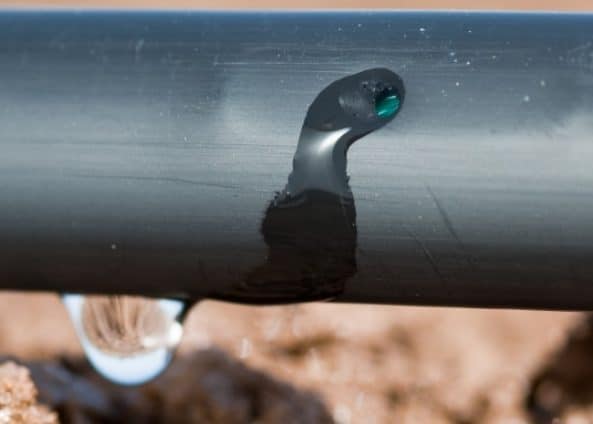
Irrigation cycles under 15 minutes, applied 6–8 times per day in peak season, ))according to soil structure(( maintain optimal root-zone oxygen and reduce leaching from raised beds. No-drain (ND), such as Rivulis D5000 ND keep water in the system between pulses, avoiding the drainage that can cause waterlogging and root disease.
3. Dual-Line Drip Pays Twice
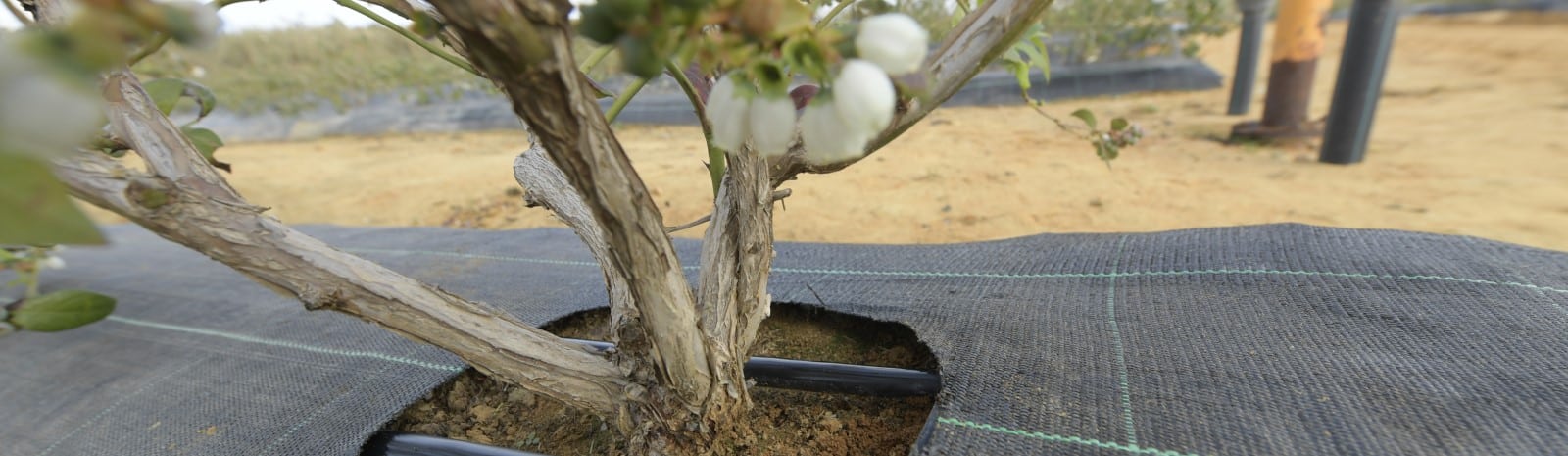
Two drip lines across a 1 m bed width ensure uniform water and nutrient distribution, support even shoot growth, and increase berry size. They also provide redundancy: in single-line systems, especially under mulch or weed mat, blockages of individual dripper can remain hidden until irreversible yield loss occurs.
A study by published by Engenharia Agrícola e Ambiental (Brazil) compared one versus two drip laterals in blueberry production. They found that using two drip laterals per row increased final yields to 4,335 kg/ha, compared to 2,436 kg/ha with a single lateral.
Single-lateral designs wet only half the ridge, leaving a significant portion of the feeder roots without access to water or nutrients, limiting the physiological potential of the root zone even if the crop’s genetics and climate would allow better growth. resulting in localized water deficit and uneven plant development.
4. Actively Manage pH — Don’t Just Correct It
Blueberries are extremely sensitive to soil pH, with optimal nutrient uptake occurring between 4.5 and 5.0. Even small drifts above this range — for example, a rise to 5.2 — can sharply reduce the availability of key micronutrients such as iron, manganese, and zinc. Over time, this leads to visible symptoms like chlorosis, reduced shoot growth, and smaller berries. To counteract this, leading growers use continuous monitoring of both soil and irrigation water pH, and actively manage it through fertigation strategies. Ammonium-based nitrogen sources, particularly ammonium sulfate, have an acidifying effect in the root zone, helping maintain the ideal range. Due to this high sensitivity, it is recommended to use advanced and precise fertigation systems, such as those offered by Rivulis. In this crop, precision in fertigation is the name of the game.
5. Calibrate Irrigation to Climate and Crop Stage
Blueberries’ evapotranspiration can reach 7–10 mm per day in summer. Using local weather-station ET data with crop coefficients ensures irrigation matches actual plant demand. Late-season adjustments, including deficit irrigation before harvest, can improve firmness and shelf life without sacrificing yield.
6. Build Climate Resilience Into the System
Spring frost during bloom or fruit set can cut yields dramatically, and heat events can soften berries before harvest. Rivulis frost protection systems, such as the Flipper micro-sprinkler, using up to 70% less water than conventional overhead systems deliver targeted protection at application rates as low as 3.0 mm/h. Canopy cooling systems can also mitigate heat spikes that impact berry quality.
7. Integrate Fertigation With Precision Irrigation
Shallow blueberry roots and high sensitivity to nutrient loss make fertigation via the drip lines the most efficient delivery method. N–NH₄ sources, applied in sync with phenological demand, improve berry size, firmness, and uniformity. Frequent low-dose applications match nutrient uptake capacity, reducing waste and environmental loss.
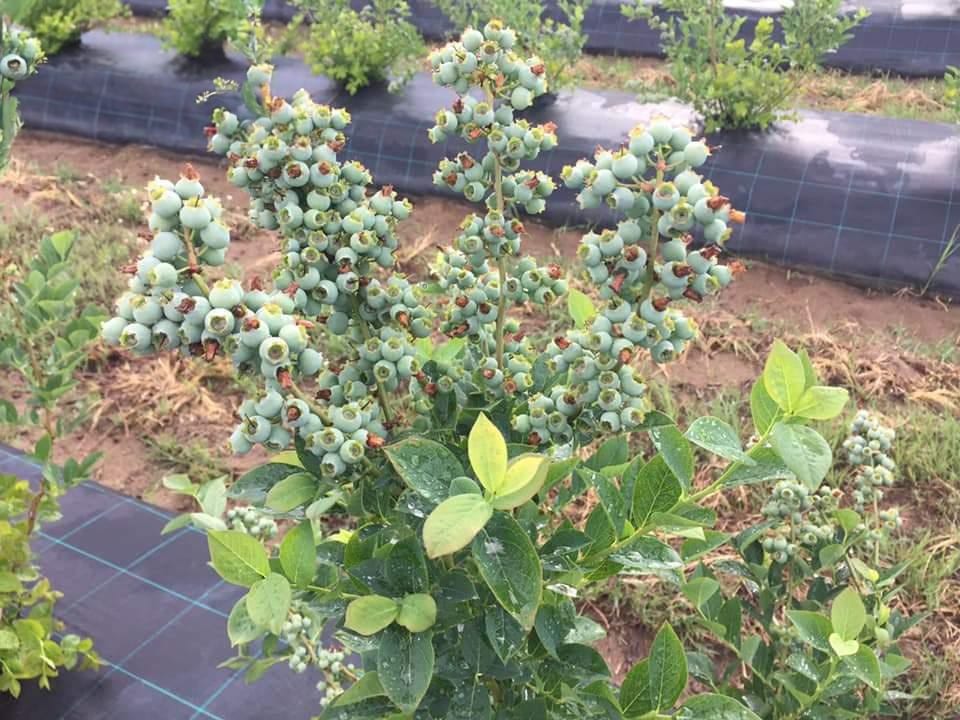
“Every one of these practices comes from years of experience and on-farm results,” said Maoz Aviv, an agronomist at Rivulis. “In a perennial crop that ‘remembers’ last year’s stress, precision is the difference between hitting your pack-out targets and missing them.”
Discover more